
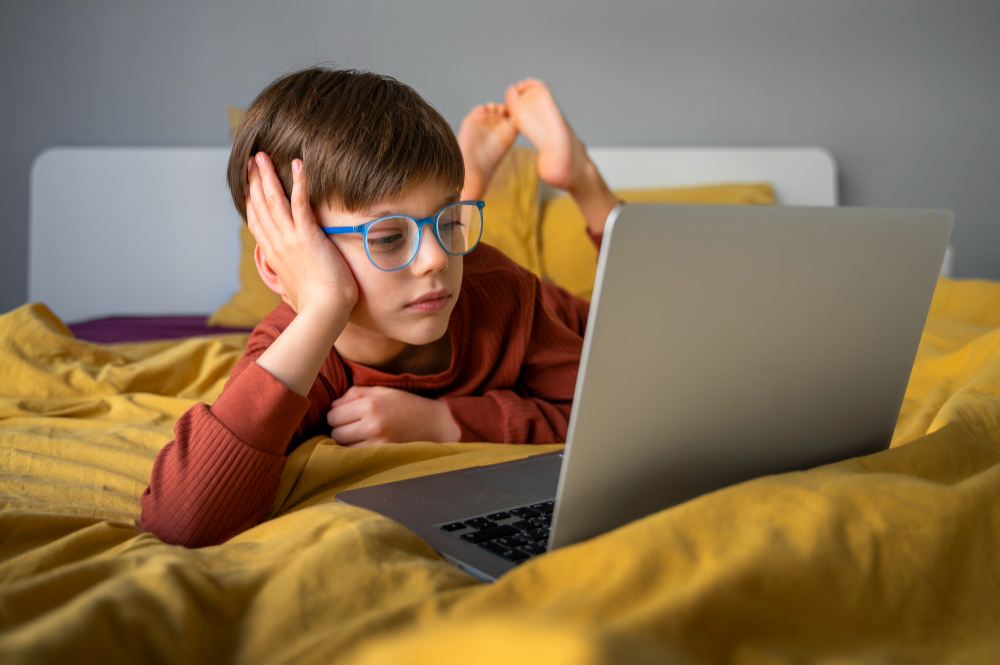
Today, many parents worry about screen time and kids. Children use screens for school, games, and fun. But, too much screen time may affect their eyes, sleep, and focus. In this blog, we explore how screens can impact your child’s health and share tips for safe use.
How Screen Time Affects Kids’ Eyes
Many children spend hours looking at screens each day. As a result, their eyes can feel tired or sore. This is called eye strain. Some kids may also notice dry eyes or blurred vision. These problems are common signs of too much screen use.
But why does this happen? First, screens give off blue light. This light can make eyes work harder. Also, kids often forget to blink when they focus on screens. Because of this, their eyes can get dry. Long periods of close-up work can also make it harder for eyes to relax.
To help protect your child’s eyes, try these tips:
According to the American Academy of Ophthalmology, these steps can lower the risk of eye strain and dryness.
Screen Time and Children’s Sleep
Screen time can also affect children’s sleep. Many studies show that using screens before bed can make it harder for kids to fall asleep. The blue light from screens can stop the body from making enough melatonin. Melatonin is a hormone that helps us feel sleepy.
Because of this, children may not sleep well or may wake up often at night. Poor sleep can lead to tiredness, mood swings, and trouble paying attention during the day.
To improve sleep, try these ideas:
The Centers for Disease Control and Prevention (CDC) recommends these habits to help children sleep better.
Impact of Screen Time on Focus and Attention
Too much screen time can also affect a child’s ability to focus. Some research links high screen use to attention problems in kids. For example, children who spend many hours on screens may find it harder to concentrate on schoolwork or other tasks.
However, not all screen time is bad. Educational programs and video calls with family can be helpful. Still, balance is key. Setting limits can help children stay focused and avoid distractions.
Here are some tips for healthy screen habits:
Following these steps can support your child’s focus and learning.
Guidelines for Healthy Screen Time
Experts like the American Academy of Pediatrics offer clear advice on screen time for kids. Their guidelines can help parents make safe choices.
In many countries, parents face similar challenges. No matter where you live, these steps can help protect your child’s health and well-being.
Conclusion
In summary, screen time and kids is a topic that matters to every family. Too much screen use can affect your child’s eyes, sleep, and focus. However, with simple steps and clear limits, you can help your child use screens safely. For advice tailored to your child’s needs, consult pediatrician Dr. Rishabh Dutt.