
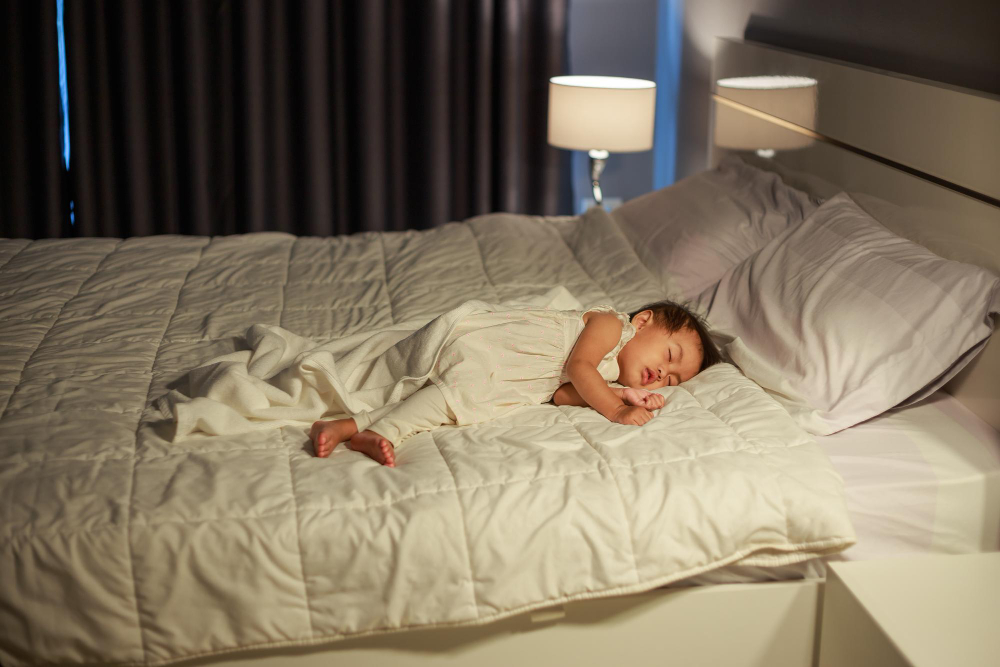
Good sleep hygiene for toddlers means creating healthy habits that help your child sleep well. Quality sleep is vital for your toddler’s growth, mood, and learning. However, many parents worry about night terrors, which can disrupt sleep and cause stress. In this blog, you’ll learn about sleep hygiene for toddlers, toddler sleep tips, preventing night terrors in children, and improving toddler sleep quality. Let’s explore how you can help your child rest better every night.
What Is Sleep Hygiene for Toddlers?
Sleep hygiene is a set of simple habits that help your toddler sleep well. For young children, these habits include regular bedtimes, calming routines, and a safe sleep space. When you follow good sleep hygiene, your child falls asleep faster and wakes up less often. As a result, your toddler feels happier and healthier during the day. Good sleep hygiene also supports brain growth and helps prevent behavior problems. According to the CDC, toddlers need 11 to 14 hours of sleep each day for healthy development.
Understanding Night Terrors in Toddlers
Night terrors are sudden episodes when a child seems scared or upset during sleep. Unlike nightmares, night terrors happen in the first few hours after falling asleep. During a night terror, your toddler may cry, scream, or look confused. However, they usually do not remember the event in the morning. Night terrors are different from nightmares because your child is not fully awake and cannot be comforted easily. While night terrors can be scary for parents, they are not harmful and often go away as your child grows.
Common Causes of Night Terrors and Poor Sleep
Several things can trigger night terrors or poor sleep in toddlers. Understanding these causes can help you prevent problems. Common triggers include:
Because these triggers are common, it’s important to watch for patterns and make changes as needed.
Effective Sleep Hygiene Tips to Prevent Night Terrors
There are many ways to improve sleep hygiene and prevent night terrors in toddlers. Try these evidence-based tips:
By using these toddler sleep tips, you can help your child sleep more soundly and reduce the chance of night terrors.
When to Seek Medical Advice
Most night terrors are not dangerous and do not need treatment. However, you should talk to your child’s doctor if:
Sometimes, sleep problems can signal other health issues. Therefore, it’s best to seek advice if you are worried.
Lifestyle Guidance for Parents
As a parent, you play a key role in your toddler’s sleep habits. Here are some practical ways to support healthy sleep at home:
With these steps, you can create a safe and restful environment for your toddler.
Prevention and Long-Term Strategies
To prevent future sleep problems, it’s important to keep healthy habits over time. Consider these long-term strategies:
By making sleep hygiene a family priority, you help your toddler build strong sleep habits for life.
If your toddler’s sleep problems persist, consult a pediatrician at Dutt Hospital for personalized advice.